Extending the Season, Not Just the Yard
Arizona's outdoor living window runs for most of the year, once you account for how much cooler evenings get, especially from fall through spring. A fire pit or built-in BBQ island turns a backyard into usable space well past sunset, which is the main reason these features come up so often in our consultations.
We build to match the same paver, stone, or travertine material used elsewhere in your yard, so the finished space feels like one cohesive project rather than a collection of add-ons.
What We Build
Planning Considerations
Building an Outdoor Kitchen That Gets Used
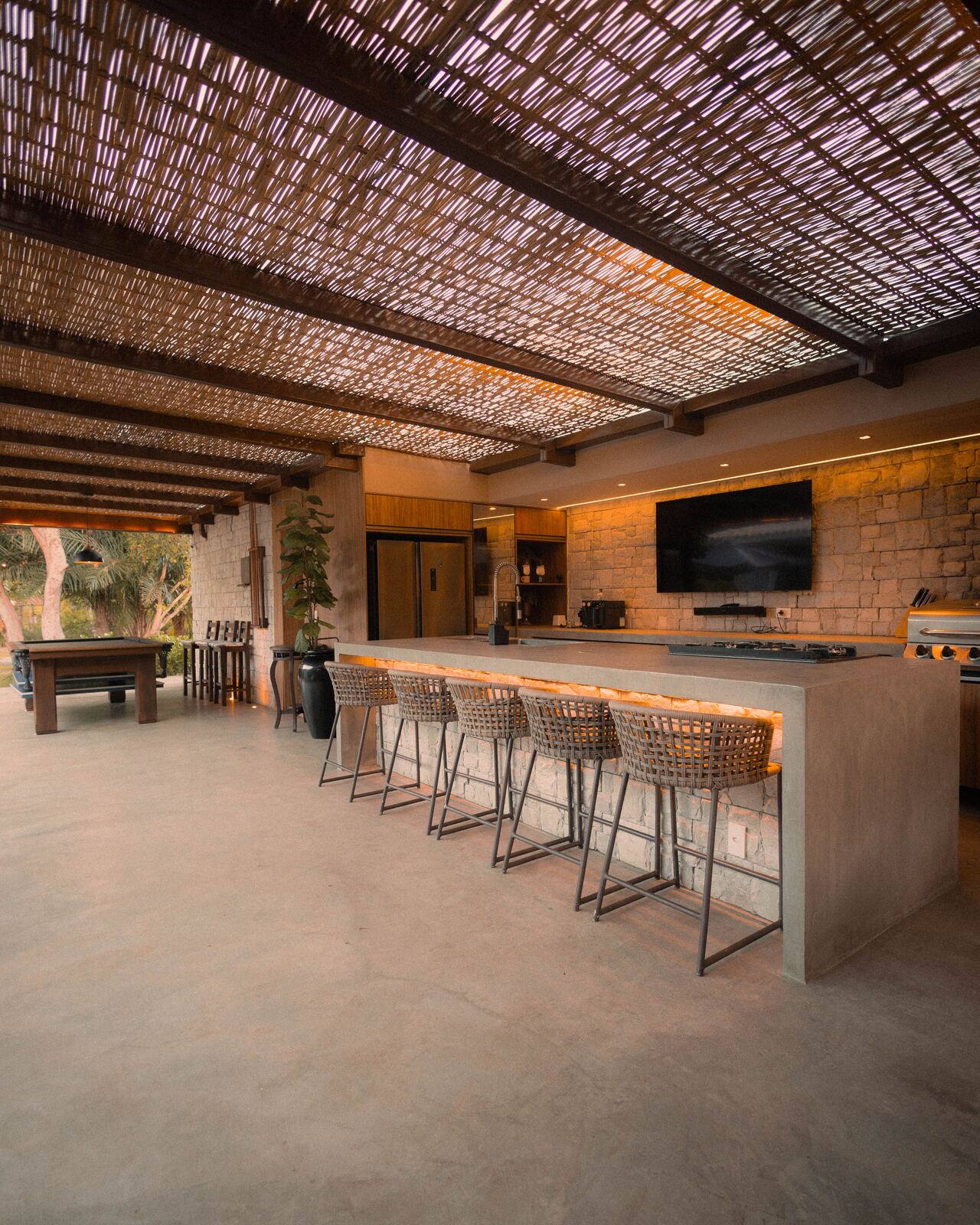
The outdoor kitchens that get used every week, not just for the occasional big gathering, are almost always built around how a specific household actually cooks and entertains — not a generic layout copied from a showroom. A built-in grill is the starting point for most projects, but the counter space, storage, and secondary appliances around it are what determine whether it functions as a real kitchen or just a fancy grill stand.
Common additions we incorporate into outdoor kitchen designs include a side burner for sauces or sides, a mini fridge or beverage center to minimize trips inside, and dedicated storage for tools, plates, and grilling accessories. Countertop material matters here too — we typically recommend concrete, tile, or natural stone with a sealed finish, since these hold up to sun exposure and food prep better than materials that weren't designed for constant outdoor use.
Layout shape depends on your space and how you like to entertain. A straight-line counter works well against a wall or fence line and is the most budget-friendly configuration. An L-shape or U-shape creates a more enclosed cooking and gathering zone and tends to work better for households that entertain often, since it naturally separates the cooking area from guest seating.
Gas vs. Wood-Burning Fire Pits, In Detail
Gas fire pits ignite instantly, require no ash cleanup, and let you control flame height precisely — the tradeoff is the upfront cost of running a gas line, plus ongoing propane costs if you're not on natural gas. They're the lower-maintenance option in the long term and the one we recommend most often for households that want to use the fire feature casually and often, without the extra step of managing a wood fire.
Wood-burning fire pits have a lower installation cost and a more traditional, campfire feel that some homeowners specifically want. The trade-offs are ash cleanup, the need to source and store firewood, and less precise control over flame size. Some HOAs and communities also have restrictions on open wood-burning fires, particularly during dry, high-fire-risk periods — worth checking before committing to this route if you're in a community with active fire restrictions.
Lighting and Evening Use
Since a large part of the appeal of these features is extending usable time into the evening, lighting is worth planning alongside the fire feature or kitchen itself rather than adding as an afterthought. Low-voltage path lighting, under-counter lighting for an outdoor kitchen, and ambient lighting around a fire pit seating area all make a real difference in how much a space actually gets used after dark, not just at dusk.
For plantings, shade trees, and softscape around a new outdoor living space outside our Goodyear service area, we recommend a landscaper we trust to tie the whole yard together.
Design Your Outdoor Entertaining Space
Free consultation and itemized quote.