Built for How Goodyear Actually Uses a Backyard
A concrete slab left bare gets hot enough to be unusable by mid-morning most of the year. We work almost exclusively in paver and natural stone for patios because the material choice matters more here than almost anywhere else in the country — heat retention, slip resistance, and long-term color stability aren't optional extras in the West Valley; they're the whole point.
Every patio starts with proper grading and a compacted base, so you're not looking at settling or pooling water after the first monsoon season. From there, we work through paver pattern, border detail, and material with you before anything goes in the ground.
Material Options
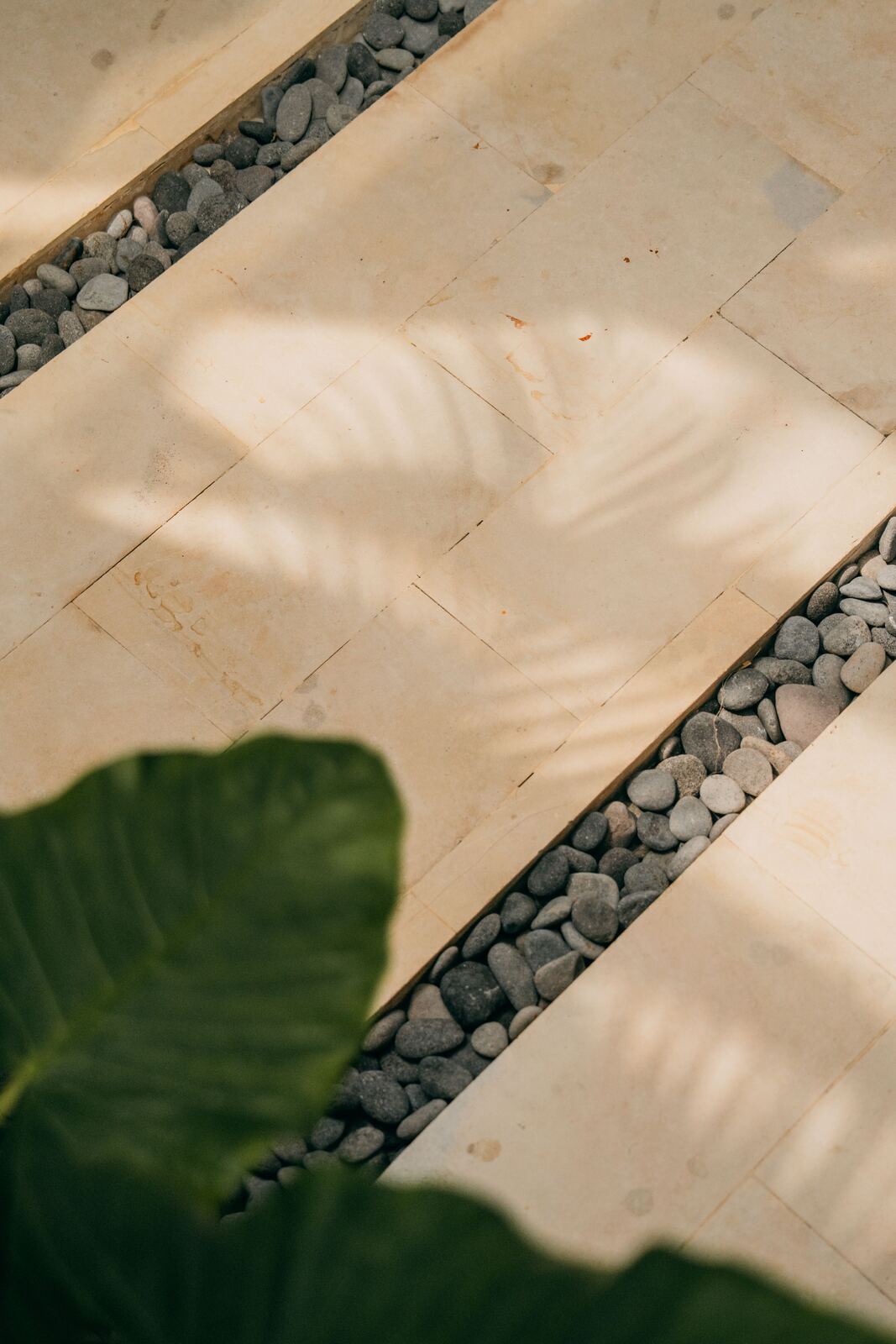
Why Travertine Comes Up So Often
Travertine stays noticeably cooler underfoot than concrete or standard pavers in direct sun, which is a real consideration for anyone using a pool deck or patio barefoot for half the year. It's a popular upgrade for homeowners in Palm Valley and Estrella who want a resort-style look without the surface heat.
What's Included
Designing for Shade and Orientation
Where a patio sits relative to your house matters as much as the material you build it from. A west-facing slab that catches the full afternoon sun will always run hotter than a shaded east- or north-facing space, regardless of what it's made of. We factor orientation into every design conversation — sometimes that means recommending a pergola or shade structure alongside the patio itself, and sometimes it means simply steering the layout toward the side of the house that gets relief earlier in the day.
Size matters too, but not in the way most homeowners initially expect. A patio that's sized for a table and a few chairs often feels cramped once you add a grill, a fire feature, or extra seating for guests. We walk through how you actually plan to use the space — daily family meals, occasional entertaining, a spot to unwind after work — before finalizing dimensions, since resizing after pavers are down is a full redo, not a simple add-on.
Pool Decks Get Special Treatment
A large share of the patio work we do in Goodyear is pool-deck-related, and pool decks have requirements that a standard patio doesn't. Surface temperature matters even more here, since bare feet are in constant contact with the deck. Slip resistance matters more too, given the wet conditions. We typically steer pool-deck projects toward travertine or textured concrete pavers specifically because they perform better on both fronts than smooth pavers or poured concrete, which can become slick and uncomfortably hot in direct sun.
Coping — the material that caps the edge of the pool itself — is worth planning alongside the deck rather than as an afterthought. Matching or complementing the coping and decking materials gives the whole pool area a finished, intentional look rather than two separate projects stitched together.
How Paver Patios Compare
Concrete pavers are the most budget-friendly option and come in the widest range of colors and patterns. They perform well under normal residential use and are a solid default choice for most backyard patios.
Travertine costs more but stays noticeably cooler in direct sun and has a more upscale, natural look — it's the material we recommend most often for pool decks and high-visibility entertaining spaces.
Flagstone gives an irregular, natural-stone look that works particularly well for a more rustic or desert-organic aesthetic, though it typically costs more to install due to the extra labor required to fit irregular pieces.
Cantera stone brings warm, earthy tones that read as distinctly Southwestern — a popular choice for homeowners aiming for a more traditional Arizona hacienda look rather than a modern one.
Need pavers for a walkway, driveway, or pool deck instead? See how we work as a paver contractor in Goodyear.
For paver patio projects outside our Goodyear service area, we recommend a paver contractor we trust to build with the same attention to base prep and drainage.
Ready for a Patio You'll Actually Use?
Get a free, itemized quote — no pressure, no obligation.